
Maybe you suspect that your loved one possibly has a problem with alcohol. Even so, things don’t really seem to add up. This person may hold down a demanding job, may be physically fit and active, and by all accounts seem to be successful in life. Still…something is off.
Alcohol use disorder does not always match the stereotype many people expect. Some individuals maintain careers, family responsibilities, and social lives while quietly struggling with alcohol dependence. These individuals are often described as high-functioning alcoholics.
Because daily responsibilities continue to be met, the problem may remain hidden for years. Learning how to tell if someone has a drinking problem can help families recognize warning signs early and guide their loved one toward professional help.
If you believe a family member with alcoholism may be hiding their drinking, understanding common patterns and behaviors can help you decide when it is time to seek support.
What is a High Functioning Alcoholic?
A high-functional alcoholic is someone who engages in alcohol use without the usual signs of distress associated with alcoholism. These individuals are likely to be married, gainfully employed, and educated. Because they continue to maintain a normal daily schedule, it may come as a surprise to learn they privately battle an alcohol use disorder.
Research from the National Institute on Alcohol Abuse and Alcoholism (NIAAA) shows that alcohol use disorder exists on a spectrum and can affect people from many professional and social backgrounds.
High-functioning individuals often work hard to hide their drinking. They may drink privately, limit alcohol consumption around others, or minimize concerns raised by family members.
Common patterns include:
- Strong denial about alcohol use
- Rationalizing drinking habits
- Maintaining professional success while drinking heavily outside work hours
- Avoiding conversations about alcohol
Over time, alcohol still affects physical health, relationships, and emotional well-being even if the impact is not immediately visible.
How to Tell If Someone Is Hiding an Alcohol Problem
Many families struggle to identify alcohol addiction because the person appears responsible and productive. However, subtle warning signs often appear long before serious consequences occur.
If you are wondering how to tell if someone is hiding an alcohol problem, watch for patterns rather than isolated incidents.
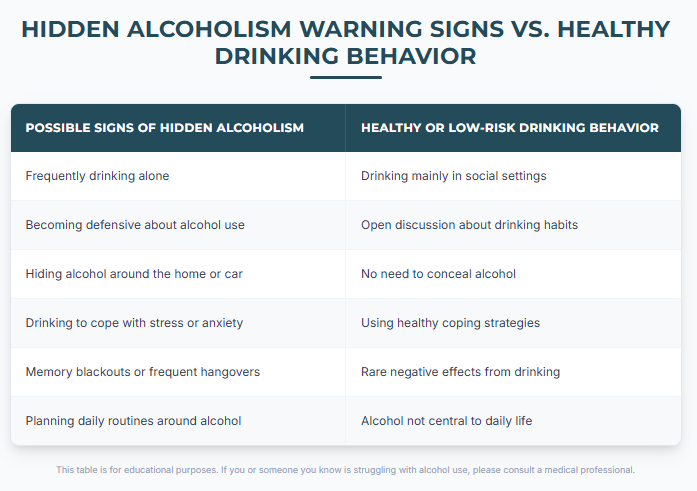
Warning signs may include:
- Drinking more frequently than they admit
- Defensiveness when alcohol use is mentioned
- Secretive drinking habits
- Mood changes tied to drinking
- Alcohol stored in unusual places
- Drinking alone after social events end
Recognizing these patterns early can help families begin supportive conversations and explore treatment options before the situation worsens.
15 Signs of Alcoholism in a Functioning Alcoholic
While the high functioning alcoholic may deny his or her problem, there are warning signs that may show otherwise. See if you spot these signs of alcoholism in your loved one:
- They increasingly use alcohol as a tool to manage stress or as a reward after a hard day at work
- They lie about how much alcohol they actually consume, even hiding alcohol around the house, office, or car.
- They use alcohol to boost their confidence on the job
- They experience memory lapses or blackouts
- They are in denial about their drinking problem, deflects with jokes or becomes angry if confronted
- They may neglect their diet, preferring alcohol to a healthy meal
- They are often told they have a high tolerance for alcohol
- They may isolate themselves where they can drink alone
- They may forget important dates or events
- They organize their life around opportunities to drink
- They may drink in the morning
- They rely on enabling tactics from others to perpetuate the image of having it all together
- They may place limitations on their drinking, such as imbibing only after work or only on the weekends
- They may be using alcohol to manage a co-occurring mental health condition, such as anxiety or depression
- They may engage in risky behaviors, such as driving under the influence
The National Institute on Alcohol Abuse and Alcoholism notes that blackouts, tolerance, and drinking despite negative consequences are common indicators of alcohol use disorder.
If several of these behaviors are present, professional evaluation may help determine whether treatment is needed.
When a Family Member Has Alcoholism
Discovering that a family member may be struggling with alcoholism can be overwhelming. Many families hesitate to bring up concerns because they fear conflict or denial.
However, ignoring the problem often allows drinking to progress.
Helpful steps families can take include:
- Document patterns of concerning behavior
- Choose a calm moment to express concern
- Focus on specific observations rather than accusations
- Encourage professional evaluation
- Seek support for yourself through counseling or support groups
Family members are often deeply affected by addiction. The National Institute on Drug Abuse (NIDA) provides information about how substance use disorders affect families and relationships.
Family support programs offered by treatment centers can help relatives understand addiction and develop healthier communication strategies.
When to Consider Alcoholism Treatment
Alcohol addiction rarely resolves without professional help. Even individuals who appear stable may experience serious medical, psychological, and social consequences over time.
Treatment may be appropriate if your loved one:
- Cannot control how much they drink
- Experiences withdrawal symptoms without alcohol
- Has repeated attempts to cut back without success
- Faces legal, financial, or relationship problems due to alcohol
- Continues drinking despite health concerns
A professional assessment can determine the severity of alcohol use disorder and recommend an appropriate level of care. Ashley Addiction Treatment, formerly Father Martin’s Ashley, is a nationally recognized nonprofit leader in integrated, evidence-based treatment for substance use disorders and is accredited by The Joint Commission. We offer both inpatient and outpatient programs, holistic addiction treatment, drug detox, relapse prevention plans, family wellness programs and a variety of other services tailored to each patient’s needs. Our driving principle — “everything for recovery” — reinforces our mission to heal each individual with respect and dignity, and reflects on our ongoing commitment to meet new challenges. For information about our comprehensive programs, please call (866) 313-6307.