

How Long Meth Withdrawal Lasts
Stopping meth is not simply a matter of waiting for the drug to leave the body.
Drug overdoses are one of the most urgent health issues linked to substance use. Whether from prescription medication or illicit drugs, an overdose can be life-threatening. Many people survive, especially when emergency care is provided quickly. But survival is just the beginning. Seeking professional treatment after an overdose is an important step toward long-term recovery.
A drug overdose can happen suddenly and leave lasting effects. Understanding what it is, recognizing the warning signs, knowing what happens in the aftermath, and learning how to reduce the risk of it happening again are all important steps. Professional treatment plays a vital role in helping individuals and families recover and build a safer, healthier future.
A drug overdose occurs when a person uses more of a substance than their body can handle. As drug levels rise in the bloodstream, the body’s vital functions may begin to shut down. Breathing can slow or stop, heart rhythm can change, and brain activity can be affected.
Overdoses can be accidental or intentional. Some occur when a person mixes substances, takes a higher dose than usual, or returns to drug use after a break. This last case is common after detox or periods of sobriety, when tolerance is lower. Opioids like heroin and fentanyl are especially dangerous in small amounts, but any drug has the potential to cause an overdose.
Spotting the signs of overdose can save lives. Symptoms often include:
If you notice any of these symptoms, call 911 immediately. Administer naloxone if available. Stay with the person until help arrives.
Yes. Many people do survive, especially if help arrives quickly. Opioid overdoses in particular can often be reversed with naloxone, a medication that blocks opioid effects in the brain. Time is critical. The sooner emergency services intervene, the better the outcome.
However, surviving an overdose doesn’t mean the danger is over. Without proper treatment, the risk of another overdose remains high. Recovery begins with understanding what led to the overdose and taking steps to prevent it from happening again.
After initial emergency care, a person who has overdosed is usually stabilized in a hospital. Doctors assess the impact of the drugs, monitor vital signs, and determine whether ongoing care is needed. Depending on the situation, detox and rehabilitation may be recommended.
Post-overdose recovery typically involves:
This period can be emotionally intense. Many people feel guilt, shame, confusion, or hopelessness. Talking with trained professionals can help individuals process what happened and move forward with support.
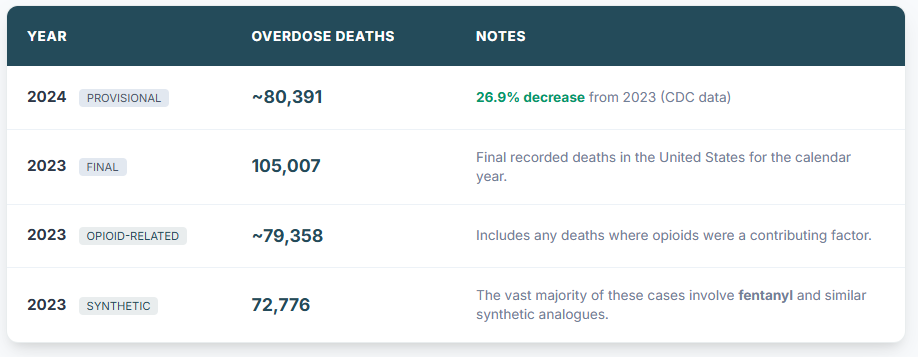
The most recent CDC data shows that drug overdoses remain a major cause of death across the United States. The table below summarizes the latest trends:
The risk of overdose can be lowered through practical steps and support:
People who have already experienced one overdose are at increased risk for another. Prevention starts with awareness and ongoing treatment.
Family members often feel helpless after a loved one overdoses. Supporting a loved one through treatment, attending family therapy, and learning more about substance use disorders can make a difference.
Family members can:
Ashley Addiction Treatment provides resources and counseling to help families understand addiction and create a supportive environment.
The days and weeks after an overdose are fragile. A person may promise to quit or feel overwhelmed by fear. Without treatment, those feelings often fade and the same behaviors return.
Relapse is common but preventable. Structured treatment helps people understand their addiction, build coping skills, and reduce cravings. Aftercare, sober living, and relapse prevention programs can help individuals stay on track and avoid returning to drug use.
Ashley Addiction Treatment, located in Havre de Grace, Maryland, supports individuals after overdose through comprehensive, person-centered care. Our programs combine medical, psychological, and peer support.
On-Site Medical Care and Detox Support: 24/7 medical care, monitoring, and detox support in a safe, supervised setting.
Individualized Treatment Plans: Each person receives a treatment plan that fits their needs, background, and goals.
Therapy and Counseling: One-on-one therapy, group sessions, and family counseling are available.
Holistic and Wellness Services: We provide access to yoga, fitness, acupuncture, massage, and mindfulness practices.
Relapse Prevention: We help individuals understand triggers, create safety plans, and build strong routines.
Comfort and Support: We offer private rooms, nutritional meals, and wellness-focused amenities to support healing.
If you or someone you care about has experienced an overdose, now is the time to seek help. Recovery starts with one step.
Call Ashley Addiction Treatment at 866-313-6307 to speak with our care team. We are here to listen, guide, and help you build a path forward.