
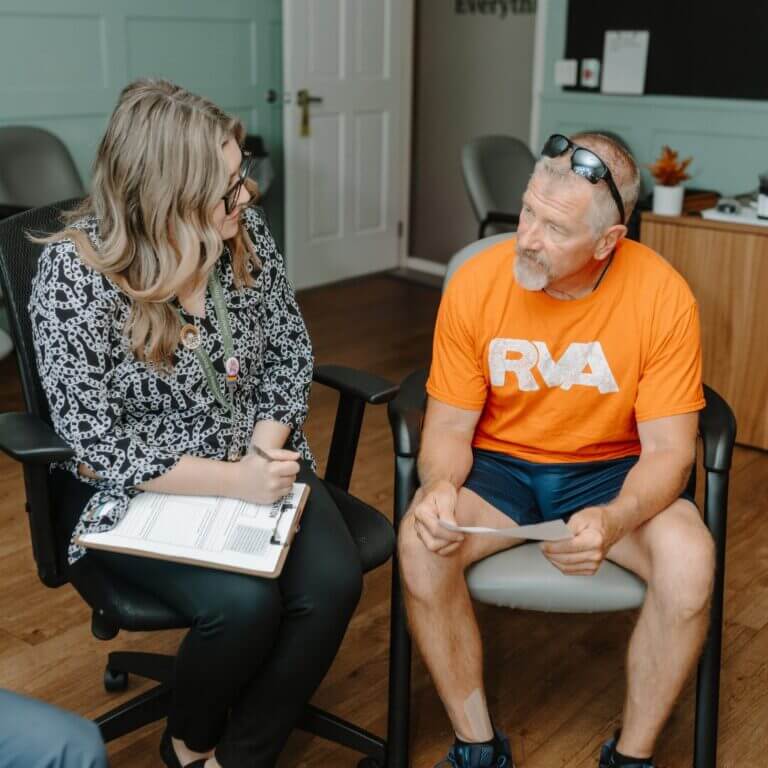
When someone begins looking for help with substance use, one of the first questions that often comes up is surprisingly simple: should I see a therapist or an addiction counselor?
At first glance, the two roles may seem interchangeable. Both provide support, help people navigate challenges, and play important roles in recovery. However, there is a meaningful difference between a counselor and a therapist when it comes to training, licensure, and areas of specialization.
Understanding those differences can help individuals and families make more informed decisions about care. Whether you’re seeking support for yourself or helping a loved one find treatment, knowing who does what can make a significant difference in the recovery process.
What an Addiction Counselor Actually Does
Many people ask, what does an addiction counselor do?
An addiction counselor is a behavioral health professional who specializes in helping people address substance use disorders and build sustainable recovery. Their work focuses specifically on alcohol and drug use, the behaviors associated with addiction, and the challenges that often arise during recovery.
On a day-to-day basis, an addiction counselor may help individuals identify patterns of substance use, develop coping strategies, create relapse prevention plans, and build healthier routines. They often facilitate individual counseling sessions, group therapy, family education, and recovery-focused treatment planning.
Unlike general mental health counseling, an addiction counselor’s primary focus is substance use disorder and its direct impact on a person’s life. This includes addressing cravings, triggers, high-risk situations, recovery motivation, and the practical challenges that accompany early sobriety.
At Ashley, our approach to recovery combines evidence-based therapies with comprehensive clinical support. Learn more about our Clinical Care services here: https://www.ashleytreatment.org/our-approach/clinical-care/.
For individuals looking for treatment resources, the Substance Abuse and Mental Health Services Administration (SAMHSA) also offers a national treatment locator through its Behavioral Health Treatment Services directory: https://www.samhsa.gov/find-treatment.
The Credentials Behind the Title: CADC, LADC, and What They Mean
Not every professional who provides counseling has the same training. Addiction-specific credentials are designed to ensure clinicians have specialized knowledge in substance use disorders.
Some common credentials include:
- CADC (Certified Alcohol and Drug Counselor) – Requires specialized coursework, supervised clinical experience, and successful completion of a certification examination focused on addiction treatment.
- LADC (Licensed Alcohol and Drug Counselor) – A state-issued license that typically requires advanced education, extensive supervised practice hours, and passing a licensing exam.
- NCAC I (National Certified Addiction Counselor, Level I) – National certification demonstrating competency in addiction counseling principles and practices.
- NCAC II (National Certified Addiction Counselor, Level II) – An advanced national credential requiring greater education and clinical experience.
- MAC (Master Addiction Counselor) – One of the highest addiction counseling credentials, recognizing significant education, experience, and expertise in substance use treatment.
These certifications matter because addiction is a highly specialized area of healthcare. When searching for an addiction counselor near me, it can be helpful to look beyond general counseling credentials and consider whether the clinician has dedicated training in substance use disorders. General mental health education is valuable, but addiction treatment often requires additional knowledge and skills that are not always covered extensively in broader counseling programs.
How a Therapist’s Training Differs
Licensed therapists—including Licensed Professional Counselors (LPCs), Licensed Clinical Social Workers (LCSWs), Marriage and Family Therapists (LMFTs), and psychologists—are trained to assess and treat a wide range of mental health concerns.
Their education often focuses on areas such as anxiety, depression, trauma, grief, relationship challenges, emotional regulation, and psychological assessment. Many therapists also work extensively with individuals who are in recovery from addiction.
This is where the difference between a counselor and a therapist becomes important. While therapists are trained to address mental health concerns broadly, addiction counselors receive specialized education focused specifically on substance use disorders, recovery processes, relapse prevention, and addiction-related behavioral change.
Both roles are valuable. In fact, many individuals benefit tremendously from therapy that addresses underlying emotional and psychological concerns. Ashley’s Psychiatric and Mental Health Care services help patients address co-occurring mental health conditions that may influence recovery: https://www.ashleytreatment.org/our-approach/psychiatric-care/.
Research has consistently shown that mental health and addiction treatment are closely connected while still requiring distinct areas of expertise. More information can be found through the National Center for Biotechnology Information (NCBI): https://www.ncbi.nlm.nih.gov/books/NBK64097/.
When You May Need Both
In many cases, recovery is most effective when individuals receive support from both an addiction counselor and a therapist.
Dual support is commonly recommended when:
- A person has both a substance use disorder and depression.
- Anxiety is contributing to substance use or relapse risk.
- Trauma history plays a significant role in recovery challenges.
- Relationship or family issues are impacting treatment progress.
- Emotional regulation difficulties persist after sobriety begins.
When these concerns overlap, addressing only one side of the equation may leave important needs unmet.
Rather than requiring patients to coordinate multiple providers independently, Ashley integrates addiction counseling, mental health treatment, and psychiatric services into a unified care plan. Learn more about Ashley’s Mental Health Services here: https://www.ashleytreatment.org/mental-health/.
Why Addiction Specifically Often Requires a Specialized Counselor
Addiction is not simply a matter of willpower, stress management, or emotional health. It is a complex condition involving behavioral patterns, neurological changes, environmental influences, and social dynamics.
This is one reason why understanding what does an addiction counselor do is so important. Specialized addiction counselors are trained to recognize the unique progression of substance use disorders and the challenges individuals face throughout recovery.
Their training often includes evidence-based approaches such as motivational interviewing, relapse prevention planning, recovery-oriented cognitive behavioral interventions, and strategies for managing cravings and triggers. These skills are designed specifically for helping people maintain long-term recovery.
An addiction counselor also understands the practical realities of recovery, including rebuilding trust, navigating high-risk environments, strengthening support systems, and developing sustainable recovery habits.
For individuals searching for an addiction counselor near me, finding a provider with dedicated addiction expertise can offer a level of support that directly addresses the challenges of substance use recovery. Ashley’s Outpatient Care programs provide this specialized support while allowing individuals to maintain work, school, and family responsibilities: https://www.ashleytreatment.org/treatment/outpatient-care/.
Finding the Right Support at Ashley
Recovery often requires more than one type of clinical support. That’s why Ashley Addiction Treatment brings together credentialed addiction counselors, licensed therapists, psychiatric professionals, and recovery specialists under one coordinated treatment model.
For individuals searching for an addiction counselor near me, Ashley’s outpatient services in Bel Air provide access to specialized addiction counseling close to home while maintaining continuity with broader mental health and recovery services when needed.
Whether you’re exploring treatment options for yourself or someone you care about, you don’t have to navigate those decisions alone. If you’d like to learn more about available services, submit an Admissions Inquiry at https://www.ashleytreatment.org/admissions/admissions-inquiry/ or contact our team directly at https://www.ashleytreatment.org/contact-us/. We’re here to help you understand your options and find the support that best fits your needs.