

Chronic substance use damages the immune system through multiple, overlapping mechanisms. Alcohol suppresses white blood cell production. Opioids impair the body’s natural killer cells. Stimulants drive systemic inflammation that persists long after use stops. The immune consequences of addiction are not a side effect. They are a core feature of how addictive substances interact with human biology, and they compound over time.
Research from the National Institute on Alcohol Abuse and Alcoholism documents that people with alcohol use disorder are significantly more susceptible to bacterial pneumonia, tuberculosis, and sepsis than the general population, with immune dysfunction measurable after as little as a few weeks of heavy drinking.
Alcohol and the Immune System
Alcohol and immune system function are directly antagonistic. Ethanol and its metabolic byproduct acetaldehyde interfere with the production and activity of leukocytes, the white blood cells that identify and destroy pathogens. Heavy alcohol use reduces the output of neutrophils from bone marrow, impairs the function of macrophages in the lungs and liver, and disrupts the mucosal barrier in the respiratory and gastrointestinal tracts that serves as the first line of defense against infection.
Alcohol and inflammation develop in tandem through a mechanism involving the gut microbiome. Chronic alcohol use alters the composition of gut bacteria and increases intestinal permeability, allowing bacterial endotoxins, specifically lipopolysaccharides, to pass into systemic circulation. The liver and immune system respond by releasing pro-inflammatory cytokines including tumor necrosis factor-alpha and interleukin-6. That inflammatory cascade, described in detail in research published by Frontiers in Immunology, is self-perpetuating: alcohol drives inflammation, and inflammation drives further immune dysregulation.
The long term effects of alcohol on immunity extend to adaptive immune function. T-cell and B-cell populations shift in people with chronic alcohol use disorder, reducing the effectiveness of the antibody-mediated response that protects against viral and bacterial infections and that underlies the efficacy of vaccines. People with severe alcohol use disorder mount weaker responses to influenza vaccination than non-drinkers, a finding documented in Alcohol and Alcoholism.
For a comprehensive look at how alcohol damages specific organ systems alongside immune function, Ashley’s blog on how alcohol physically damages the body covers the liver, brain, and cardiovascular dimensions in parallel.
Opioids and Immune Function
Opioids and immune system suppression operate through both direct and indirect pathways. Opioid receptors are present not only in the central nervous system but on immune cells themselves, including T-lymphocytes, macrophages, and natural killer cells. When opioids bind to these receptors, they reduce the proliferation and activity of immune cells, suppress natural killer cell cytotoxicity, and shift the balance of T-helper cell populations in ways that impair the response to infection and tumor surveillance.
A review published in the Journal of Neuroimmunology found that both endogenous and exogenous opioids modulate immune function across multiple cell types, with chronic exposure producing sustained suppression rather than acute, dose-dependent effects. This means the immune consequences of opioid use disorder accumulate and do not simply resolve between doses.
The indirect pathway involves the lifestyle and injection-related risks associated with opioid use disorder. People who inject opioids face elevated rates of endocarditis, skin and soft tissue infections, septic arthritis, and HIV and hepatitis C transmission. An already-suppressed immune system compounds the severity of these infections and reduces the body’s capacity to recover from them.
Neuroinflammation represents a third dimension. Opioids activate microglia, the brain’s resident immune cells, which release pro-inflammatory signals that contribute to the neurotoxicity associated with long-term opioid use. Ashley’s blog on neuroinflammation and addiction covers this mechanism in depth, including how it relates to cognitive changes in early recovery.
How Different Substances Affect Immune Function
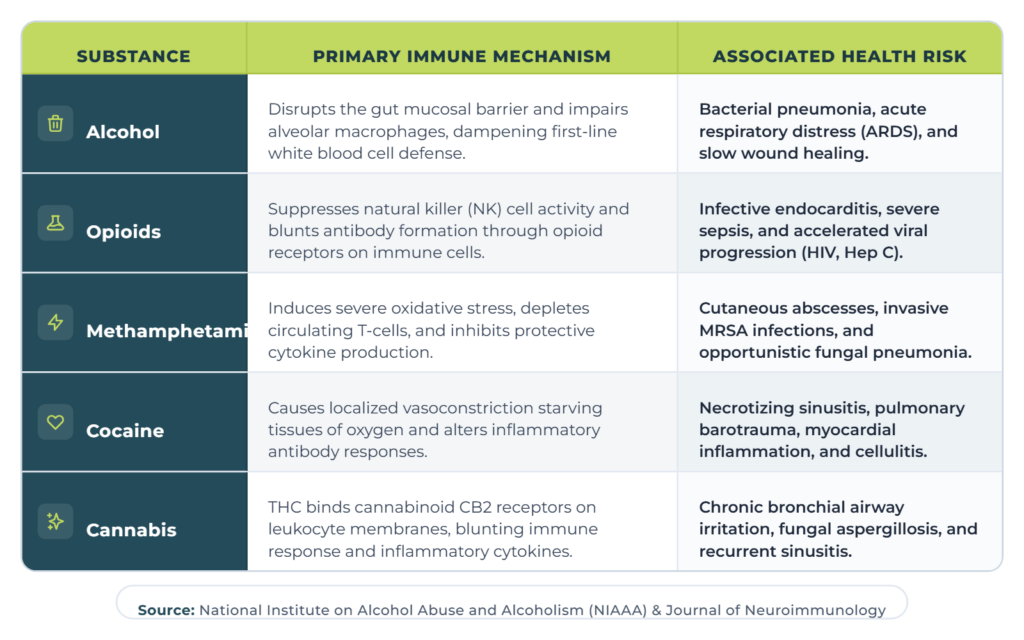
The immune consequences of addiction vary by substance. The following summarizes the primary mechanisms documented in peer-reviewed literature:
- Alcohol suppresses neutrophil and macrophage production, increases intestinal permeability driving systemic inflammation, impairs mucosal barriers in the lungs and gut, and reduces vaccine efficacy through T-cell and B-cell dysfunction.
- Opioids bind directly to immune cell receptors to suppress natural killer cell activity and T-lymphocyte proliferation, activate neuroinflammatory microglia in the brain, and elevate infection risk through injection-related transmission.
- Methamphetamine produces oxidative stress and neuroinflammation, accelerates HIV replication in people co-infected with the virus, and damages the blood-brain barrier in ways that allow peripheral inflammatory signals to enter the central nervous system.
- Cocaine suppresses immune surveillance through its effects on dopamine signaling, which modulates lymphocyte activity, and drives vascular inflammation that contributes to cardiovascular complications.
- Cannabis has bidirectional effects depending on dose and frequency. Acute use produces anti-inflammatory effects through cannabinoid receptors on immune cells. Chronic heavy use suppresses immune surveillance in ways that increase susceptibility to respiratory infection.
Inflammation, Addiction, and the Brain
Addiction and immune system dysregulation share a common thread in neuroinflammation. Chronic substance use activates microglia, the central nervous system’s immune cells, producing sustained release of pro-inflammatory cytokines including interleukin-1 beta, tumor necrosis factor-alpha, and interleukin-6. These signals disrupt synaptic function, impair neuroplasticity, and contribute to the anhedonia, cognitive fog, and mood dysregulation that characterize early recovery.
The relationship between peripheral inflammation and central nervous system function runs in both directions. Systemic inflammation driven by alcohol-induced gut permeability or opioid-driven immune suppression feeds back into the brain through the blood-brain barrier and the vagus nerve, amplifying the neuroinflammatory signal. Research published in Brain, Behavior, and Immunity identifies this bidirectional feedback loop as a driver of the psychological symptoms of substance use disorder that persist into recovery.
This neuroinflammatory burden has clinical implications for treatment. Patients entering addiction treatment with elevated inflammatory markers show slower cognitive recovery and higher rates of early relapse than those without significant inflammation. Addressing the inflammatory dimension of addiction, through nutrition, sleep, exercise, and where appropriate medications, improves outcomes in ways that targeting only the behavioral and psychological dimensions does not.
Immune Recovery After Stopping Substance Use
The immune system begins recovering after substance use stops, but the timeline depends on the substance, the duration of use, and the presence of co-occurring infections or organ damage.
Alcohol: Neutrophil counts begin normalizing within weeks of abstinence. Gut microbiome composition improves measurably within one to three months, reducing the endotoxin-driven inflammatory signal. T-cell populations show recovery over six to twelve months, though vaccine response improvements take longer in people with significant prior liver damage.
Opioids: Natural killer cell activity improves within weeks of sustained abstinence. Neuroinflammatory markers, including microglial activation, show slower recovery and may persist for months into recovery, contributing to the post-acute withdrawal syndrome (PAWS) symptoms that many people experience.
Stimulants: Oxidative stress markers decrease relatively quickly with abstinence, but neuroinflammatory changes in the prefrontal cortex and striatum documented by neuroimaging studies persist beyond six months in people with long-term methamphetamine use disorder.
Recovery from addiction is, in part, an immune recovery process. The body’s capacity to restore immune function is substantial, but it requires the conditions that only sustained abstinence provides. For people with significant long-term use histories, clinical support during that recovery period reduces the risk of relapse during the window when immune function, mood, and cognitive capacity are still suboptimal.
Getting Help at Ashley Addiction Treatment
People entering addiction treatment at Ashley Addiction Treatment’s main campus in Havre de Grace, Maryland receive a comprehensive medical evaluation at intake that accounts for the physical health consequences of chronic substance use, including immune status, nutritional deficiencies, and infection screening. Board-certified physicians, psychiatrists, and licensed addiction counselors build treatment plans around the full clinical picture, not only the substance use history.
Ashley’s clinical care approach integrates medical management, psychiatric care, and evidence-based therapy from the first day of admission. For patients with co-occurring infections or significant physical health complications from long-term use, Ashley’s medical team coordinates care alongside the addiction treatment program.
Medication supported recovery is available where clinically appropriate, including medications that reduce opioid cravings and support neurological stabilization during the early recovery period when immune and cognitive recovery are underway.
Reach out through admissions or contact Ashley directly to speak with an admissions counselor before any commitment is made.