

What is OxyContin?
OxyContin appears in news coverage, court cases, and conversations about the opioid crisis regularly, but many people are still unclear...

Cocaine addiction can take over your life, but recovery is possible with the right support. If you or a loved one is struggling with cocaine dependence in Maryland, you’re likely familiar with the cocaine withdrawal symptoms that make quitting so challenging. Detoxing from cocaine (especially through a medically supervised program) is the first crucial step toward reclaiming your health and happiness. In this guide, we’ll explain what cocaine withdrawal entails, the side effects of cocaine withdrawal to expect, and how Ashley Addiction Treatment’s cocaine detox programs in Maryland can help you safely overcome withdrawal and start healing
Cocaine is a powerful stimulant that produces a brief, intense high. Over time, your brain and body adapt to the drug. When you stop using cocaine, you experience cocaine withdrawal, a collection of physical and psychological symptoms as your body detoxifies and adjusts to the absence of the drug. Unlike withdrawal from alcohol or opioids, cocaine withdrawal often has no severe visible physical symptoms (for example, it typically doesn’t cause the dangerous shaking or seizures seen in alcohol withdrawal. However, cocaine withdrawal can be profoundly challenging due to its emotional and mental side effects. People coming off cocaine commonly experience a “crash” shortly after their last use – marked by exhaustion and depressed mood – followed by days or weeks of further withdrawal symptoms.
Repeated cocaine use floods your brain with dopamine (the “feel-good” chemical). Your brain then reduces its normal dopamine activity in response. When cocaine use stops, dopamine levels plummet, leading to feelings of depression, fatigue, and intense cravings for the drug. This imbalance is what causes most withdrawal symptoms and makes it hard to feel normal without cocaine.
These symptoms and side effects of cocaine withdrawal can range from mild to very intense. Most are not medically dangerous on their own, but they can feel very distressing.
Depression and lack of pleasure can be especially hard to cope with. Some people even experience suicidal thoughts during cocaine withdrawal.
Cravings and mood swings can lead to relapse if you don’t have proper support. It’s important to remember that withdrawal is temporary. With each day you stay off cocaine, your brain and body move closer to regaining balance.
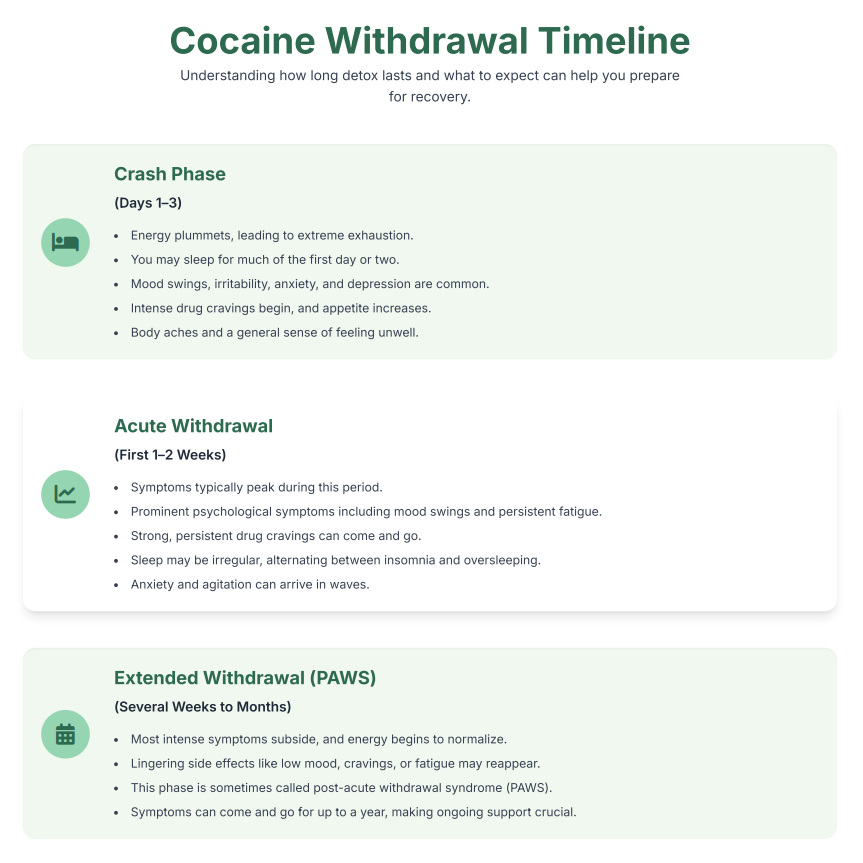
How long does cocaine withdrawal last? The timeline can vary based on factors like how long and how intensely you were using, but generally cocaine withdrawal unfolds in a few phases:
Going through cocaine withdrawal on your own can be overwhelming. A medical cocaine detox program provides the safety net and care you need during this critical time. Here’s why a supervised detox from cocaine is so important:
Remember: Willpower alone is often not enough to overcome cocaine withdrawal. There is no weakness in seeking help, in fact, it’s a courageous and wise choice. A supervised detox provides both clinical professionalism and emotional support, giving you the best chance at a safe withdrawal and a strong start to recovery.
When cocaine addiction is present in your life, you will begin to lose sight of responsibilities. Moreover, you may begin to lose interest in activities you once enjoyed.
In fact, cocaine addiction can cause many financial burdens as well. Known as a “rich man’s drug,” cocaine is widely sold on the street at high prices. If you recognize someone struggling with cocaine addiction, reach out today for more information about our cocaine detox program in MD.
In order to overcome cocaine addiction, it takes guidance, support, and addiction treatment services from qualified professionals who understand your needs. The detox and rehab center you choose plays a pivotal role in your recovery success.
Ashley Addiction Treatment in Havre de Grace, Maryland treats addiction to cocaine through detox and rehab programs. We offer three core substance abuse programs:
We provide on-site detox programs as part of our comprehensive access to medical care. After supervised detox, you’ll transition into residential or intensive outpatient rehab for your addiction. Our mission is to deliver innovative, integrated, and holistic care for people just like you.
While gaining strong recovery at Ashley, your wellness increases through a variety of amenities. These amenities include yoga, acupuncture, meditation, massage, personal training in a wellness center with fitness equipment, dietary support, 24-hour access to food, semi-private rooms, laundry services, and housecleaning.
Stop letting cocaine addiction control your life. Call Ashley Addiction Treatment now at 866-313-6310 for help.