

Key Takeaways:
- Morphine affects both the brain and body by altering pain perception, mood, and brain function, leading to high addiction potential.
- Long-term morphine use can cause significant brain changes, withdrawal symptoms, and mental health complications.
- Recovery from morphine addiction is possible with evidence-based treatment that includes therapy, medical care, and support.
Morphine is a potent opiate used as an analgesic for managing pain — it’s also highly addictive. But what does a morphine addiction actually do to the brain?
In what ways does morphine impact the brain’s structures, chemicals and reward system?
Let’s start with the basics.
What is Morphine?
Morphine is a powerful opiate derived from the opium poppy. It’s used medically for pain relief but is also highly addictive. In the U.S., morphine is classified as a Schedule II controlled substance due to its risk for abuse. Doctors typically prescribe it for pain after surgery or injury, or for managing chronic or cancer-related pain. Morphine is usually taken by injection, IV, or in pill form.
Why Is Morphine Addictive?
Morphine triggers the brain’s reward system by flooding it with dopamine—a chemical that produces feelings of pleasure and relaxation. This creates a strong association between morphine use and feeling good. Over time, the brain becomes less responsive to natural sources of pleasure, increasing the urge to use morphine repeatedly. This reinforcement cycle makes it highly addictive, even for those using it under medical supervision.
What Does Morphine Do to the Body?
Beyond its impact on the brain, morphine affects several systems in the body. It slows down heart rate and breathing, reduces digestive activity, and can cause nausea or dizziness. Over time, the body builds tolerance, requiring more of the drug to get the same effect. This can lead to dangerous dosing patterns and serious health consequences, including overdose.
How Morphine Impacts the Brain
Morphine works by binding to the opioid receptors in the brain, thereby blocking pain signals from the nervous system. In as little as one month of daily usage, morphine can cause significant effects on the brain. These include:
- Reduced neuroplasticity
- Psychomotor impairment
- Decreased gray matter volume in the amygdala
- Diminished reflex response
- Disrupted brain synapses causing impaired memory
- Reduced respiration and heart rates due to changes in the neural activity in the brain stem
- Interference with the brain’s chemical messenger production, distribution, and reabsorption
Morphine has a profound effect on the brain’s reward system. Morphine causes the brain to release a flood of dopamine, the feel-good neurotransmitter. This registers in the reward system, prompting repeated use of the drug by causing cravings. Over time, the brain trains the person to seek pleasure through morphine instead of the usual sources of pleasure.
After Effects of Morphine Use
Even after someone stops taking morphine, the after effects can linger. This includes physical withdrawal symptoms, as well as ongoing mental health struggles like depression, anxiety, and brain fog. These symptoms occur because the brain has adapted to the presence of morphine and struggles to re-regulate itself once the drug is removed.
Morphine Side Effects and Withdrawal Symptoms
Chronic morphine use can lead to both immediate and long-term side effects. These may include:
- Constipation
- Nausea and vomiting
- Drowsiness or dizziness
- Suppressed appetite
- Breathing issues
- Mood swings or irritability
During withdrawal, the body reacts to the absence of morphine with symptoms like chills, sweating, stomach cramps, muscle aches, insomnia, rapid breathing, and severe anxiety. These symptoms can be intense and distressing but are a natural part of the detox process.
Morphine Recovery: What Treatment Looks Like
Recovery from morphine addiction involves more than just stopping use—it requires support to repair both brain and body function. Comprehensive treatment often includes:
- Medical detox to manage withdrawal safely
- Individual and group therapy to address behavioral patterns
- Mental health support for co-occurring conditions
- Life skills training and relapse prevention
- Ongoing outpatient support or aftercare
Effective recovery supports the whole person and adapts to each individual’s needs. Programs like those at Ashley Addiction Treatment use evidence-based and holistic methods to help people build long-term stability.
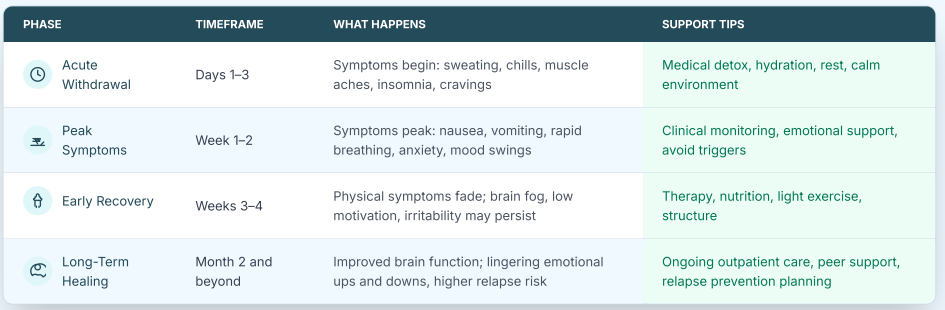
Morphine Recovery Timeline
Help for Morphine Addiction
As with any opioid use disorder, someone who wishes to break free from morphine dependence or addiction will benefit from the help of a formal substance recovery treatment program. These comprehensive treatment programs utilize an evidence-based approach to guide the individual toward making lasting changes in thought and behavior patterns.
Treatment for morphine addiction will involve a combination of elements that are designed to work together. The blend of therapies and holistic methods help to bring about positive behavioral changes, while also equipping the individual with needed recovery skills and coping techniques.
In learning how morphine addiction affects the brain, it is clear that great caution be exercised, even when using it for medical reasons. However, with patience and commitment, an individual can overcome a morphine addiction.
If you or someone you care about is struggling with morphine addiction, professional help can make a real difference. Ashley Addiction Treatment offers personalized, compassionate care designed to meet you where you are.
Contact us today to learn more.