

Stopping meth is not simply a matter of waiting for the drug to leave the body. The withdrawal process can stretch across weeks, and the psychological aftermath can linger far longer than the physical symptoms. For many people, the gap between knowing they need to stop and successfully doing so comes down to understanding what withdrawal actually involves and what kind of support the process requires.
This article walks through the meth withdrawal timeline, explains why the drug is so difficult to stop using, and outlines what a structured drug treatment plan looks like for people ready to pursue lasting recovery.
Why Meth Is So Hard to Stop Using
To understand meth withdrawal symptoms, it helps to start with what the drug does to the brain. Meth triggers a massive release of dopamine, the neurotransmitter associated with pleasure, motivation, and reward. According to Utah State University, meth can release up to 12 times the normal amount of dopamine in the brain, far exceeding what any natural reward produces. That surge is what makes the high so intense and, for many users, immediately habit-forming.
Over time, the brain responds to this repeated overstimulation by reducing its own dopamine production and receptor sensitivity. The brain, in effect, recalibrates around the drug’s presence. As research from Vanderbilt University explains, once those pleasurable sensations from meth stop, the resulting crash drives powerful cravings for more. This neurological remodeling is at the heart of how addictive meth is, and it is also what makes the withdrawal period so destabilizing. The brain is no longer producing adequate dopamine on its own, and in the absence of the drug, it struggles to regulate mood, energy, sleep, and motivation.
Withdrawal Symptoms From Meth: What to Expect
Meth withdrawal does not carry the same risk of seizures or cardiovascular collapse that alcohol or benzodiazepine withdrawal does. However, the psychological symptoms can be severe enough to become medically significant, and the risk of relapse during withdrawal is substantial.
The most commonly reported withdrawal symptoms from meth include:
- Extreme fatigue and hypersomnia: The body crashes hard after the stimulant effect wears off, often leading to prolonged sleep that can extend for days.
- Depression and dysphoria: The brain’s depleted dopamine supply can produce a profound low mood that may reach clinical levels of depression in some individuals.
- Intense cravings: Cravings are among the most persistent symptoms and a leading driver of relapse during the withdrawal period.
- Anxiety and irritability: Heightened emotional reactivity is common, particularly in the first week.
- Cognitive difficulty: Trouble concentrating, poor memory, and slowed thinking are frequently reported during acute withdrawal and may persist into early recovery.
- Increased appetite: After weeks or months of appetite suppression, hunger often returns sharply once use stops.
- Anhedonia: The temporary inability to feel pleasure from everyday activities is one of the more disorienting symptoms, and one that makes early recovery feel particularly bleak without proper support.
The Meth Withdrawal Timeline
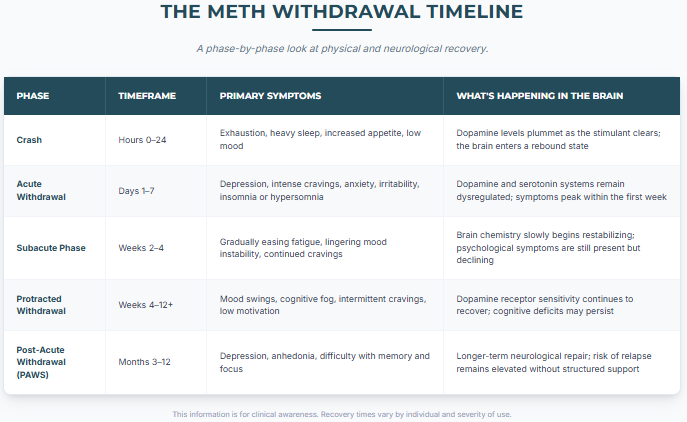
Note: Timelines vary based on the duration and intensity of use, method of administration, and whether co-occurring mental health conditions are present.
How a Withdrawal Management Program Supports Recovery
One of the most important things to understand about meth withdrawal is that there are currently no FDA-approved medications specifically designed to treat it. Unlike opioid withdrawal, where medications like buprenorphine can directly stabilize the affected receptor systems, meth withdrawal management relies on clinical support, behavioral therapy, and careful symptom monitoring.
What Medical Supervision Provides
A structured withdrawal management program does several things that home detox cannot. Medical staff can monitor for severe depression and assess suicide risk, which is a real concern given how sharply mood drops during meth withdrawal. They can address dehydration and nutritional deficits that accumulate during active use. Sleep support, non-addictive medications for anxiety, and therapeutic engagement can all meaningfully reduce how difficult the withdrawal period feels, and how long a person is able to stay committed to it.
Inpatient care removes the person from the environment where use occurred, which matters enormously for meth specifically. Because meth cravings are so strongly tied to environmental cues, people and places associated with past use can trigger intense urges even weeks into sobriety. A residential setting disrupts that pattern and builds the early foundation of recovery in a space where triggers are absent.
Building a Drug Treatment Plan Beyond Detox
Detox addresses the body. Recovery addresses everything else. A comprehensive drug treatment plan for meth addiction typically incorporates cognitive behavioral therapy to address the thinking patterns that sustained use, contingency management approaches, and treatment for any co-occurring mental health conditions. The medication-supported recovery framework at Ashley integrates pharmacological tools where appropriate alongside behavioral care, treating the whole person rather than the withdrawal event alone.
Meth recovery also requires acknowledging that the cognitive effects of long-term use, including problems with memory, focus, and emotional regulation, may take months to fully resolve. A drug treatment plan that accounts for this reality is far more effective than one that treats discharge from detox as the finish line.
Finding Maryland Detox and Treatment for Meth Addiction
For individuals in the Mid-Atlantic region, accessible, evidence-based care is available close to home. Maryland detox and treatment programs that specialize in stimulant addiction can provide the medically supervised stabilization and therapeutic programming that meth recovery demands.
At Ashley Addiction Treatment, the approach to meth recovery begins with meeting each patient where they are clinically and building a plan that reflects both the severity of withdrawal and the longer-term work of sustained sobriety. If you or a loved one is ready to take the next step, submit an admissions inquiry or reach out to our team of experts to get the help needed.