
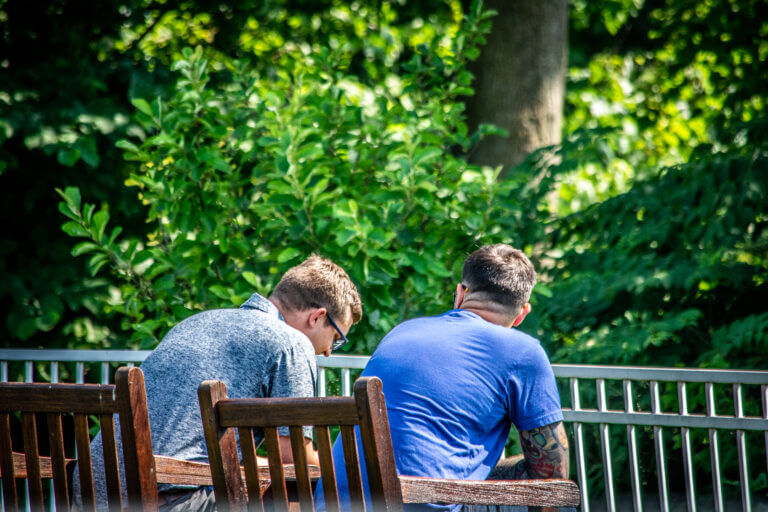
People-Pleasing in Recovery
People-pleasing often begins as a coping strategy.
Goal: $20,000,000
Amount Raised: $17,161,343
“My role is to ensure the research we do is both meaningful and actionable. The goal is to build a research program that not only informs care at Ashley but also contributes to the broader field.”
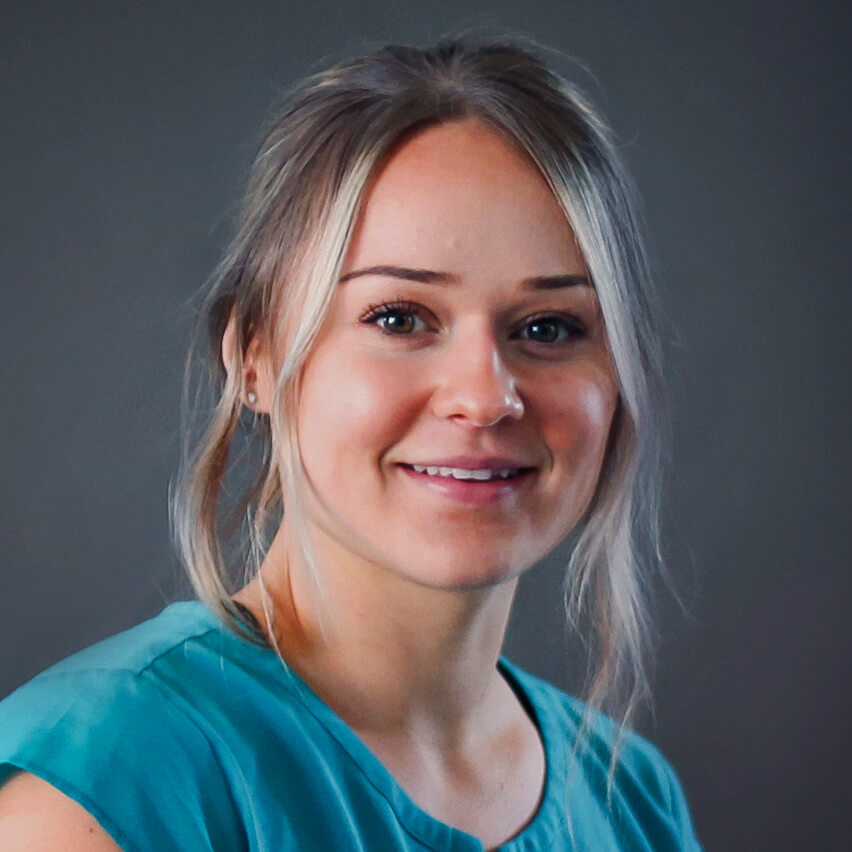
Jami Mayo Barney, M.B.A. is Ashley’s Research Manager, having joined Ashley in 2021. However, she began working here as a collaborator two years earlier. She is helping lead an incredibly impactful and dynamic aspect of how Ashley treats patients currently and will also shape what treatment looks like in years to come. With Jami’s incredibly busy schedule, we were grateful that she was able to take some time to sit down with us. Here, she tells us a little about her background, how she helps craft Ashley’s treatment strategies, and what she sees for our patients – and addiction treatment as a whole – in the future. Plus, you’ll won’t believe her very unusual hobby that puts dinner on the plates of many area restaurant guests – maybe even you!
Q1: Thanks for sitting down with us, Jami! And thank you for all the work you and your team do every day. We couldn’t be more grateful for your impact on the patients’ experience, as well as optimizing their future outcomes. First question – so many of our patients and staff see first-hand the impact you make at Ashley every day. But how would you explain your role at Ashley to someone you’ve never met?
Jami: It’s my pleasure, thanks for asking! I lead Ashley’s research program, which is structured around three core areas:
My role is to oversee these areas and ensure the research we do is both meaningful and actionable. I manage key relationships with investigators, funders, and data partners, and I act as the project supervisor for each study—from concept development and funding to implementation and compliance. The goal is to build a research program that not only informs care at Ashley but also contributes to the broader field.
Q2: What were some of the roles you had prior to this one, and what are one or two of the skills that you developed from those positions that have benefited you in your current one?
Jami: I’ve been working in research since undergrad, supporting studies across areas like pediatric psychology, mood disorders, and behavioral pharmacology. Most of those studies recruited participants from the broader Baltimore community, so I gained a lot of experience engaging with people from all backgrounds and with varying levels of mental and physical health. Because those studies often spanned multiple departments, I had to learn how to coordinate across teams without formal authority. That really helped me develop the ability to lead through collaboration—bringing people together around shared goals, which is something I rely on a lot in my current role.
Q3: How has Ashley evolved in the years that have passed since you joined the team?
Jami: I first connected with Ashley while working at Hopkins, leading a study where Ashley was one of the sites. Even then, it was clear the organization wanted to do more than just participate in research—they wanted to build something of their own, grounded in science, not just philosophy. Since then, we’ve been able to secure funding and formally launch a research program here. I joined the team full-time, and what started as a team of just three people has now grown into a department of 11! Beyond research, I’ve seen Ashley evolve in its mindset. There’s a new generation of leadership that’s asking tougher questions and challenging long-held assumptions—and that openness is leading to real innovation in how we treat patients.
Q4: Working in the addiction treatment field – and certainly conducting research – can provide some long, emotional days. How do you manage the highs and lows, and maintain mental, emotional, or spiritual balance for your own well-being?
Jami: Even though my day-to-day work is analytical, I stay grounded by leaning into adventure and creativity outside of work. My husband and I are big on hobbies—we’ve backpacked through 56 countries so far, always chasing new experiences, whether it’s paragliding, skiing, or trying new foods. When we’re home, we’re usually working on house renovations, playing softball, or out on the water fishing. One very unexpected fun fact about me is that I got my commercial bow fishing license to harvest snakehead a few years ago, and we supply a few local restaurants. We’ve spent many evenings passing Ashley’s campus by boat, and it’s truly stunning from the water. Being outdoors, especially on the water, has become a huge source of balance for me. It gives me space to recharge and stay connected to the deeper purpose of the work we do.
Q5: What are some of the best ways to provide individualized treatment that provides a patient with the very best pathway for successful recovery?
Jami: Individualized treatment starts with really listening—to both the data and the person. At Ashley, we use research and standardized tools to understand patterns in care and outcomes, but we also recognize that no two recovery journeys look the same. This blend of data and personal insight is what we refer to as precision medicine—an approach that uses evidence-based tools to guide care while still centering each person’s unique story. The most successful care plans come from balancing what the data tells us with what the patient shares—their goals, challenges, and lived experience. When we take the time to understand the full picture, we can help each patient find a path that’s truly theirs—and that’s where real, lasting recovery begins.
Q6: You possess an extensive academic background and have conducted countless research studies. You’ve also earned your MBA from the Johns Hopkins Carey School of Business. But what are some of the soft skills and natural gifts that someone in your role must possess and develop to become successful in a role like yours?
Jami: Strong communication is essential—especially when translating complex research across clinical, academic, and executive teams. Relationship-building is also key, since collaboration is at the heart of almost every project. Adaptability matters too. In research, things change quickly and staying calm and solution-focused is crucial. Curiosity and strategic thinking help drive innovation and keep the work moving forward. And above all, empathy. Whether it’s with patients, staff, or partners, keeping people at the center of the work ensures the research stays grounded in purpose—not just publication.
Q7: Last question, Jami! Ashley is on the cusp of some very new and exciting growth in the area of addiction treatment research. A commitment to research will be a huge part of that. Are there some techniques or strategies that you can envision evolving not only at Ashley, but in the field of addiction treatment as a whole?
Jami: Much of the addiction treatment field still relies heavily on philosophy-based approaches, but I believe science-based care is on its way to becoming the standard. At Ashley, we’ve already laid the groundwork. Our team has built a strong foundation for a more scientific, data-informed model—using tools like real-time outcomes tracking, measurement-based care, and precision medicine to truly tailor treatment to each patient. There’s also broader shift toward value-based care; payors increasingly expect providers to show true effectiveness—not just program completion, but long-term impact. Our ability to track and analyze patient outcomes puts us in a strong position. So, we’re not just improving care today—we’re helping define what high-quality, accountable addiction treatment will look like in the future.
Thank you so much for your time, and for sharing both your story and your fascinating perspective with all of us. We can’t wait to see what’s next!
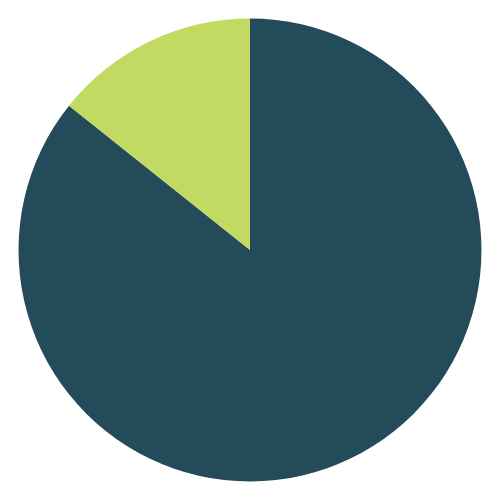
In Father Martin’s biography One Step More, there is an interesting account of the history of the Oakington Estate, where Ashley resides today. While the historical facts can vary a bit, this timeline sheds light on some pivotal moments for this beautiful piece of land for which we are all grateful.
The Oakington Estate has a long and fascinating history. Land records show that in 1659, an 800-acre tract of land was surveyed and registered as Oakington Farm to a British army officer, Col. Nathanial Utie, a gift from the King of England.
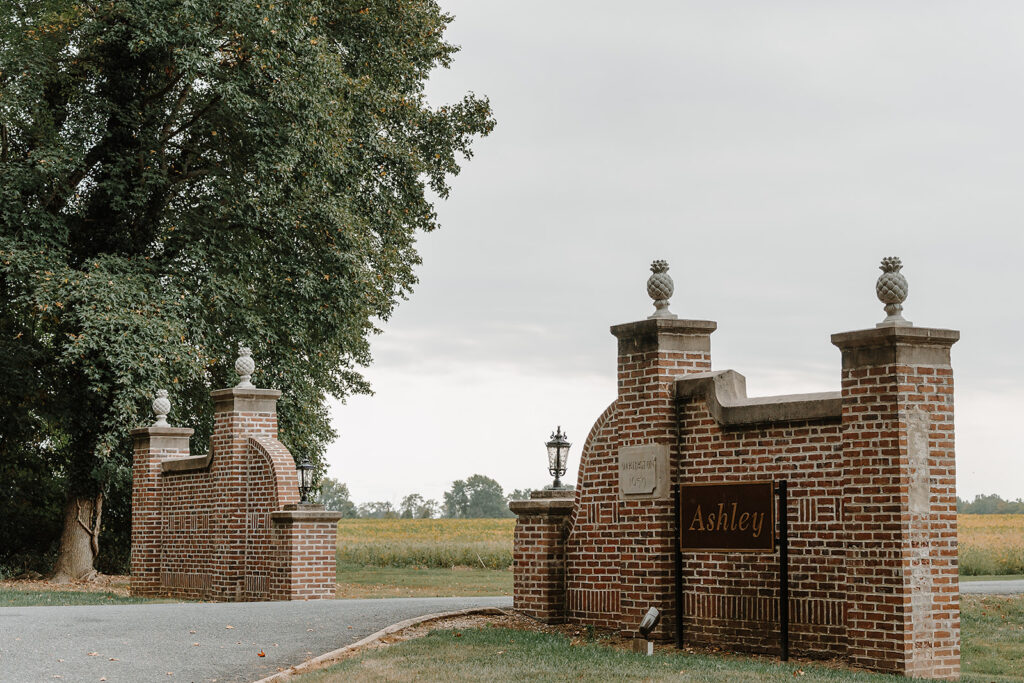
Land records indicate that in 1812 John Stump purchased the land and the stone mansion that had been built there to be used by his son, John Wilson Stump, and his bride-to-be. It is known that the property remined in the Stump family until 1865. (In 1895), it was purchased by The Hunt Club. The estate became known as “The Blind” and it was used as an exclusive duck-shooting club.
Then, in 1905, James Lawrence Breezy, a member of the club, purchased the property to be used for his private residence. He hired Stanford White, a personal friend, and at the time one of the most prominent (and eccentric) architects in the world, to improve his property. Under White’s direction, a wing was added to the original mansion.
The next owner, Commodore Leonard Richards, a millionaire from Wilmington, DE, purchased the estate in 1915. He built the stone north wing, and the solarium, and oversaw major improvements to the land itself. After Richards’ death in 1933, the estate was leased to a Major Enoch B. Garry, and for the next two years, it was used as a private boys’ school. Then, in 1935, the estate was purchased by US Senator Millard E. Tydings, who resided there for 44 years. Scores of prominent people, including governors, senators, and several presidents (including John F. Kennedy) visited the estate while Tydings lived there.
Fr. Martin and Mae Abraham received a permit/variance to establish their treatment center, now Ashley, in 1982.



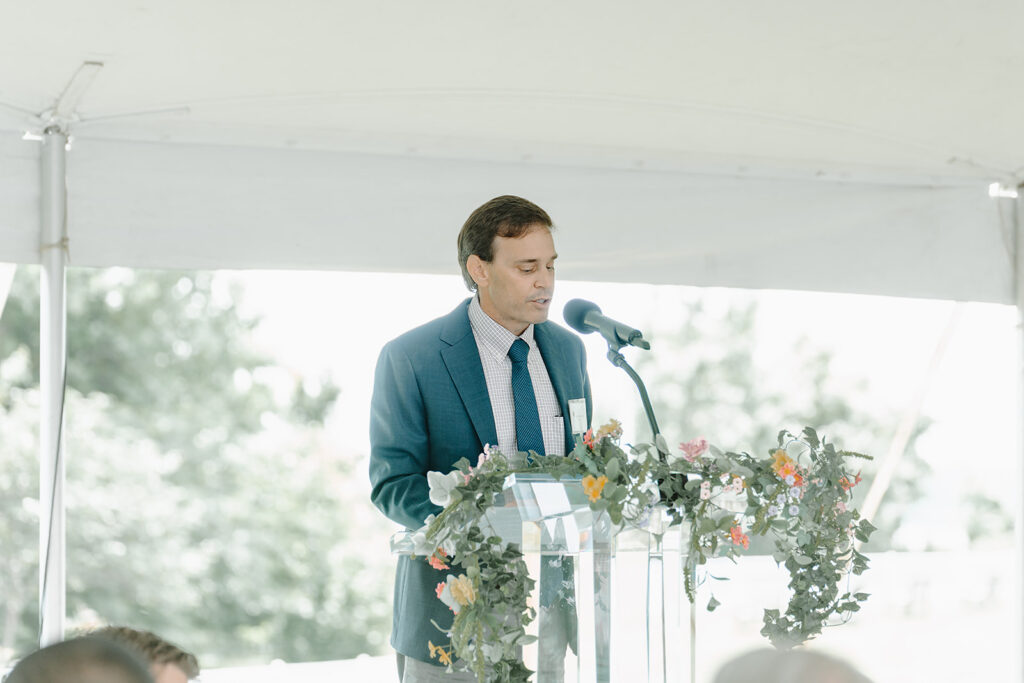
Gregory Hobelmann, M.D., M.P.H
Co-CEO and President
On Research: Research is foundational in the treatment of SUD’s – it allows us to treat people more effectively and to have improved wellness last longer. It’s all about taking an evidence-based approach rather than a philosophy-based approach. It’s looking at what’s happening now, and determining how to improve it. In order to bring treatment and healthcare together, research must be a vital component.
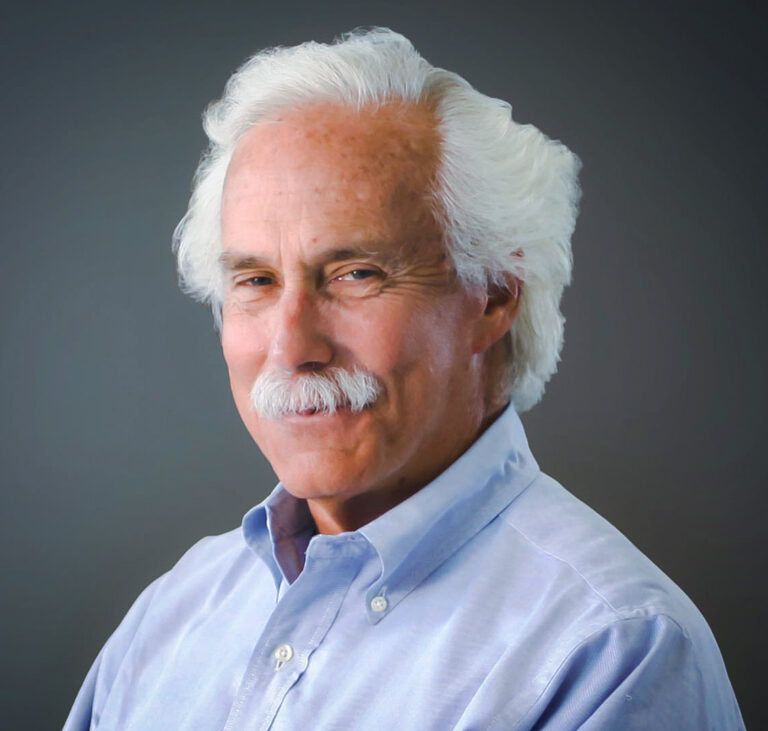
Board Member
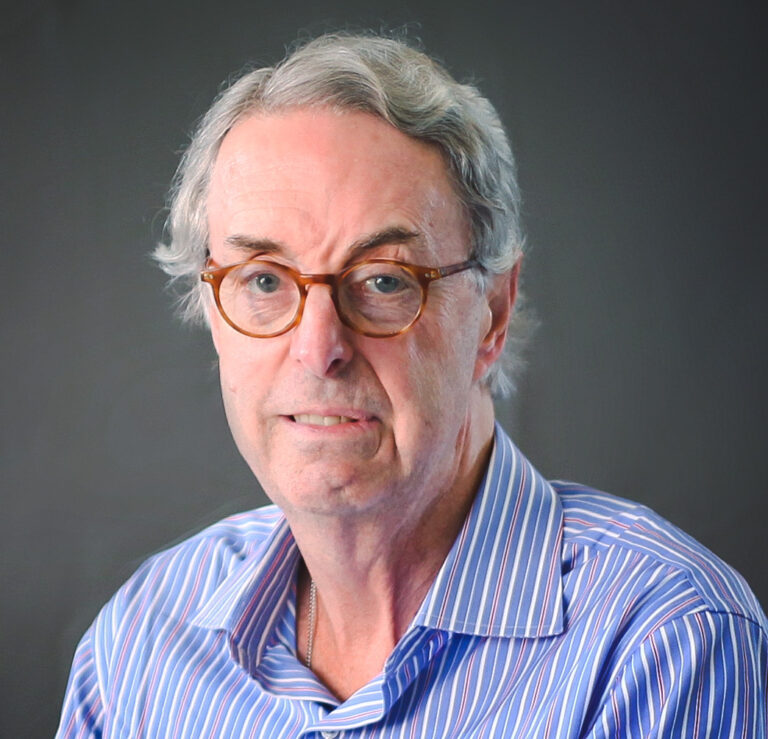
Board Chair
Nick Balducci
Nan Bender
Liz Bonner
Bryan Davis
Dave Dworsky
Jimmy Fragoyannis
Dev Ganesan
Toni Griswold
Betsey Hobelmann
John Hoel
Joe Jackson
Jessie Nance
Phyllis Raskin-Hadley
Terry Smith
Rachael Teacher
Marot Williamson