

Unlocking What’s Possible: Joey’s Story of Healing and Connection
Joey grew up surrounded by addiction.


Ashley Addiction Treatment has helped more than 70,000 individuals reclaim their lives from substance use disorder since our founding in 1983. We combine evidence-based clinical care with deep compassion and spiritual grounding. Through our growing research department and academic partnerships—including faculty collaborations with Johns Hopkins—we are shaping a future of recovery that is personalized, measurable, and effective.

Why It Matters: These cutting-edge studies directly lead to new, improved treatment strategies for the patients we serve today—and those we will serve tomorrow.
Collect patient reported symptoms, biometrics, treatment outcomes
Identify psychological and physiological therapeutic targets
Design clinical trials test the efficacy of interventions
Refine treatment interventions and subsequent clinical programming
At Ashley, research is not an add-on—it’s central to everything we do.
We believe that effective care begins with listening and learning. Measurement is how we listen; research is how we learn—so we can provide better care. It’s how we help people get well sooner—and stay well longer.
Unfortunately, addiction treatment research has long been underfunded and underdeveloped. Too often, treatment has been guided by philosophy rather than science—like treating hypertension without ever checking blood pressure. We’re changing that.

At our core, we are in the knowledge business – we strive to learn, treat, and teach.

Anxiety can significantly interfere with the healing process in recovery. Our findings confirm that at Ashley, anxiety gets demonstrably better. We use this real-time information to tailor care, helping each individual find relief, stay actively engaged in treatment, and develop the emotional resilience vital for long-term recovery.

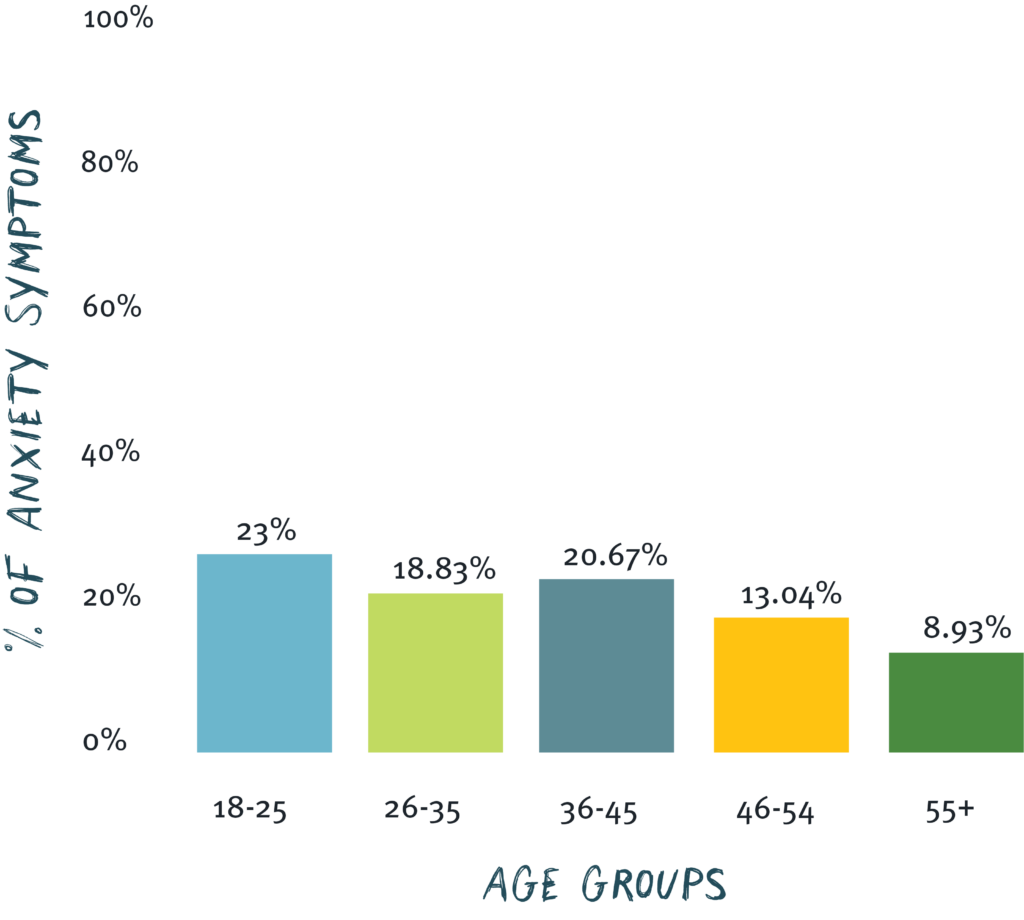
Consistent Treatment Effect Across Ages: By Week 4, anxiety prevalence fell to ~9-23% across all age groups, representing 74-85% relative reductions.
Older Adults Show Greatest Proportional Relief: Patients 55+ dropped from 59.53% to 8.93% (an
85% reduction), demonstrating particularly strong gains in this age group.
"*" indicates required fields